
Rio Tinto is accelerating its expansion in Argentina’s lithium industry with two new production facilities backed by a combined $1.4 billion investment, even as volatile battery-metal prices and operational challenges test the economics of the global lithium supply chain.
The Anglo-Australian mining giant officially inaugurated its Fénix 1B expansion and Sal de Vida lithium operation in Catamarca province on October 28, with Argentine President Javier Milei and provincial Governor Raúl Jalil attending the ceremony. Both projects achieved first production in the second quarter of 2026, ahead of schedule, and are now increasing output.
Together, the facilities will add 25,000 tonnes of annual lithium carbonate equivalent (LCE) capacity when fully operational. The investment comprises approximately $700 million for each project, according to Rio Tinto’s regulatory disclosures.
The inauguration comes as the company’s latest production figures show lithium output increasing 33% during the first nine months of 2026 compared with the corresponding period last year. However, third-quarter production declined 11% sequentially, highlighting the operational challenges accompanying its rapid expansion.
Rio Tinto is targeting 200,000 tonnes of global annual lithium production capacity by 2028, positioning the mineral as a major growth business alongside its established iron ore, copper and aluminium operations.
“These two projects build on nearly three decades of lithium production in Catamarca and the expertise of our Argentine workforce,” CEO Simon Trott said at the inauguration.
“They demonstrate our industry-leading project delivery capability, as we execute with discipline towards our global target of 200,000 tonnes lithium carbonate equivalent annual production capacity by 2028.”
Fénix and Sal de Vida Add 25,000 Tonnes of Capacity
The $530-million Fénix 1B expansion adds 10,000 tonnes of annual LCE capacity, taking the operation’s targeted production capacity to approximately 40,000 tonnes.
Fénix began commercial production in 1997 as Argentina’s first lithium operation. Its expansion builds on the existing facility’s infrastructure and Rio Tinto’s experience extracting lithium from underground brine deposits.
The company is also considering another major expansion at the Hombre Muerto salt flat through a proposed Fénix II development.
The project could require approximately $1 billion in additional investment. Trott told Reuters during his Argentina visit that it was under consideration as the next phase of expansion, with a final investment decision potentially towards the end of the decade.
Rio Tinto plans to submit Fénix II to Argentina’s Large Investment Incentive Regime (RIGI) in 2027, potentially securing long-term tax, legal and foreign-exchange benefits if approved.
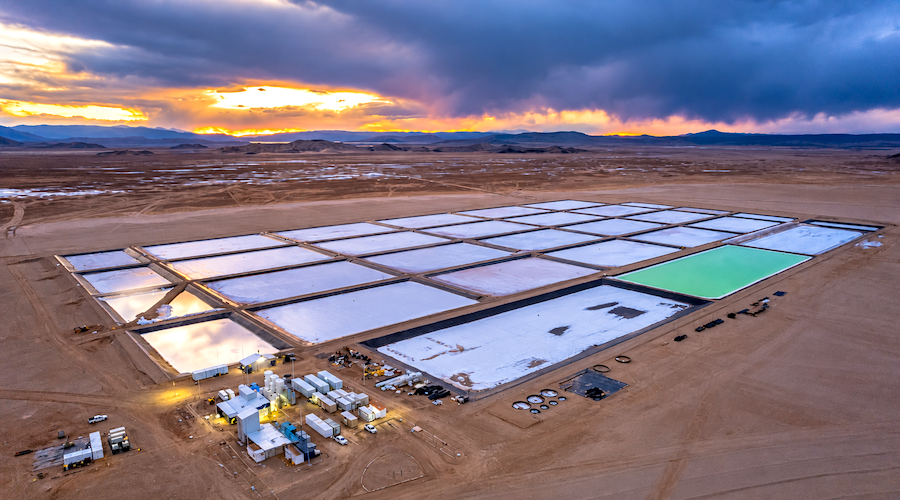
Sal de Vida, located approximately 20 kilometres northeast of Fénix, is a new lithium carbonate operation with a targeted annual capacity of 15,000 tonnes. Its first phase involved an investment of approximately $700 million.
The two developments form part of Rio Tinto’s integrated lithium production hub in the Salar del Hombre Muerto, where the company is seeking to maximise infrastructure sharing, operating efficiencies and resource utilisation.
The projects use different extraction methods. Fénix employs direct lithium extraction (DLE), while Sal de Vida relies on conventional solar evaporation ponds to concentrate lithium-bearing brine before processing it into lithium carbonate.
DLE uses selective extraction processes to separate lithium from brine without waiting for prolonged solar evaporation. Its potential advantages include faster processing, higher recovery rates and reduced water consumption, although commercial costs, scalability and long-term operating performance remain important considerations.
French miner Eramet has also deployed DLE technology at its Centenario-Ratones project in Argentina’s Salta province, where production began in late 2024.
Rio Tinto’s broader Argentine portfolio includes Fénix, Sal de Vida, Olaroz and the Rincón development in Salta province. Its global lithium expansion also includes projects in Canada following its acquisition of Arcadium Lithium.
Rincón is a particularly important component of the company’s growth strategy. The $2.5-billion project is designed to produce approximately 60,000 tonnes of battery-grade lithium carbonate annually, with first production expected in 2028 and a three-year ramp-up to full capacity.
In March 2026, Rio Tinto secured a $1.175-billion financing package from the International Finance Corporation, IDB Invest, Export Finance Australia and the Japan Bank for International Cooperation to support Rincón’s development.
The project is expected to have an operating life of approximately 40 years.
Reuters reported that Rio Tinto aims to increase its Argentine lithium production capacity to 160,000 tonnes annually by 2028, while targeting 200,000 tonnes globally.
Argentina’s RIGI Incentives Attract Lithium Investment Despite Price Volatility
The expansion strengthens Argentina’s ambitions to become a major lithium supplier as President Milei seeks foreign investment through market-oriented economic reforms and the RIGI programme.
The incentive regime offers qualifying investments exceeding $200 million a package of tax, legal and foreign-exchange benefits for 30 years.
Rio Tinto’s Fénix 1B expansion received RIGI approval in March 2026. The company’s broader Argentine investment pipeline is expected to receive substantial benefits from the framework as additional projects progress through regulatory approvals.
Around 70% of approximately $4 billion in planned growth capital across Rio Tinto’s Argentine lithium operations is expected to be spent with local suppliers, according to the company.
Milei described the Fénix expansion as a milestone for the country’s mining industry.
“The expansion of the Fénix project is a historic milestone that demonstrates the potential of Argentina’s mining sector,” he said, adding that investment incentives had helped restore the country’s attractiveness to international companies.
Argentina is part of South America’s Lithium Triangle alongside Chile and Bolivia, a region estimated to hold approximately 60% of global lithium reserves.
The country’s government expects lithium production to reach 573,000 tonnes of LCE annually by 2035 and potentially overtake Chile by 2029.
However, the investment drive is unfolding against an uncertain global pricing environment.
Fastmarkets’ October 2026 market assessment reported that Chinese lithium carbonate futures had fallen sharply in September amid weaker market sentiment, concerns about inventory levels and uncertainty over near-term battery production. S&P Global Energy also reported that Chinese battery-grade lithium carbonate prices had fallen 25% between July 1 and October 9, reaching 120,000 yuan per tonne.
Despite the price correction, producers are continuing to advance projects in anticipation of longer-term demand from electric vehicles, battery manufacturing and grid-scale energy storage.
Rio Tinto’s latest production figures show growth but Q3 setback
Rio Tinto’s third-quarter 2026 production report provides a more immediate measure of the expansion’s progress.
The company produced 13,000 tonnes of LCE in the third quarter, up 4% from the corresponding period in 2025 but down 11% from the second quarter.
Nine-month production reached 40,300 tonnes, representing a 33% increase from the same period last year. Rio Tinto attributed the weaker sequential performance partly to adverse weather affecting its lithium operations.
The company maintained its 2026 production guidance of 61,000 to 64,000 tonnes, indicating that it expects to finish the year near the lower end of that range.
The Fénix 1B ramp-up is progressing well, according to the production report.
The latest figures underline the distinction between installed capacity and actual production. Although the two newly inaugurated Argentine facilities are expected to add 25,000 tonnes of annual capacity, their contribution will depend on commissioning, operating consistency and the pace at which they reach full production.
For Rio Tinto, the challenge is no longer simply securing lithium resources or announcing new investments. It must demonstrate that its expanding portfolio can deliver reliable volumes at competitive costs through volatile commodity cycles.