
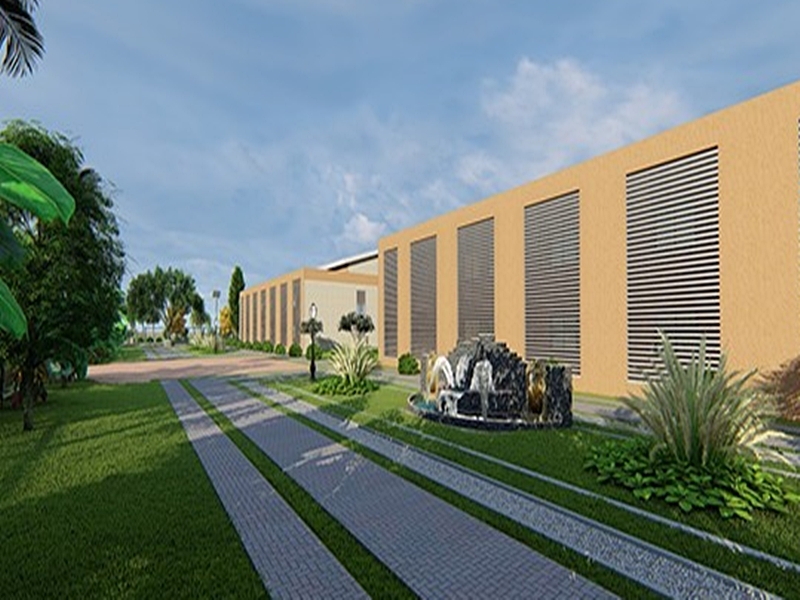
India’s state-run Indian Rare Earths Limited (IREL) has established a first-of-its-kind Rare Earth and Titanium Theme Park in Bhopal, aimed at accelerating the commercialisation of indigenous technologies and strengthening the country’s strategic mineral ecosystem.
The facility, inaugurated by Atomic Energy Commission Chairman and Department of Atomic Energy Secretary Ajit Kumar Mohanty, has been developed under the National Critical Minerals Mission, a flagship initiative launched by the Centre to secure India’s supply of critical minerals that are essential for electric vehicles, semiconductors, renewable energy systems, aerospace applications and defence manufacturing.
The project comes at a crucial time as countries worldwide seek alternatives to China’s overwhelming dominance in rare earth supply chains. China currently controls about 90 per cent of global rare earth processing and around 93 per cent of rare earth magnet production, giving Beijing substantial influence over industries ranging from electric mobility to advanced electronics.
India has 5th largest rare earth reserves
India possesses the world’s fifth-largest rare earth reserves, estimated at nearly 6.9 million tonnes, but has historically remained a minor player in mining, processing and value addition. Policymakers are increasingly focused on converting resource potential into industrial capability.
The Bhopal facility has been built around the “Lab-to-Product” model, designed to bridge the longstanding gap between scientific research and industrial deployment. Technologies developed by the Bhabha Atomic Research Centre (BARC) will be demonstrated and scaled for commercial applications, allowing industries to assess their viability before adoption.
Officials said the park is structured around the “3P Framework” including Process, Performance and People. The initiative aims to develop advanced mineral processing technologies, establish quality and performance benchmarks for industry, and train skilled manpower required for India’s emerging critical minerals sector.
One of the centre’s key attractions is its focus on rare earth elements such as Neodymium and Cerium. Neodymium is a crucial component in permanent magnets used in electric vehicle motors, wind turbines, robotics and defence systems. Cerium finds applications in catalysts, glass polishing, electronics and clean-energy technologies.
The facility will also demonstrate advanced recycling technologies that can recover rare earth elements from discarded magnets and industrial waste. This aligns with India’s push towards a circular economy, where critical materials are recovered, reused and reintroduced into manufacturing supply chains rather than being discarded.
National Critical Minerals Mission
The timing of the project is significant. Earlier this year, the Union Cabinet approved the National Critical Minerals Mission with an outlay of Rs 16,300 crore over seven years, while public sector and private sector investments are expected to exceed Rs 18,000 crore. The mission aims to accelerate exploration, mining, processing and overseas acquisition of critical mineral assets.
India has simultaneously intensified international partnerships in the sector. The country recently signed a critical minerals cooperation framework with the United States and is also participating in the Minerals Security Partnership, a grouping that includes the US, Australia, Japan, Canada and several European nations seeking to develop non-Chinese supply chains.
Officials believe the Rare Earth and Titanium Theme Park could become a national demonstration hub for strategic mineral technologies, helping Indian companies move up the value chain from raw mineral extraction to advanced materials manufacturing.
Beyond reducing import dependence, the project is expected to generate skilled jobs, attract industrial investment and strengthen domestic capabilities in sectors considered vital for India’s long-term economic and national security interests.
With demand for rare earths projected to surge globally due to the rapid expansion of electric vehicles, renewable energy infrastructure and artificial intelligence hardware, the Bhopal facility marks an important step in India’s effort to establish itself as a credible alternative player in the global critical minerals landscape.