
Australian rare earths developer Viridis Mining and Minerals has entered advanced negotiations with potential buyers in Europe and the United States for future production from its flagship Colossus project in Brazil, as Western nations intensify efforts to reduce dependence on China’s near-monopoly over critical minerals.
The company on Thursday inaugurated a rare earth research and processing centre in Pocos de Caldas, Minas Gerais, marking a key milestone in its plan to bring the Colossus mine into commercial production by the end of 2028.
Viridis Chief Executive Officer Rafael Moreno said the facility will produce the project’s first mixed rare earth carbonate, a precursor material containing strategic elements such as neodymium, praseodymium, dysprosium and terbium that are essential for manufacturing permanent magnets used in electric vehicles, wind turbines, robotics, semiconductors and advanced defence systems.
The opening of the processing centre comes amid growing geopolitical competition over critical minerals. Governments in the United States, Europe, Japan, Australia and India have stepped up efforts to establish alternative supply chains as concerns mount over China’s dominance of the sector.
According to industry estimates, China currently accounts for about 60 per cent of global rare earth mining output but controls more than 90 per cent of global refining and processing capacity. It also dominates rare earth magnet manufacturing, giving Beijing significant influence over industries central to the global energy transition and defence production.
Decided to go down the Western Route: CEO
“We took a stance pretty early on to go down the Western route,” Moreno said. “As diversification of supply chains occurs, we believe we’ll get better value for our products versus the suppression of prices that China is able to do when all the product goes there.”
Moreno said Viridis has received significant interest from Chinese buyers but has deliberately chosen to focus on Western customers. Discussions with prospective investors, lenders and strategic partners have centred on ensuring that the Colossus project remains outside Chinese-controlled supply chains.
The approach reflects a broader trend across the rare earth industry, where governments and companies are increasingly prioritising supply security over pure commercial considerations.
China’s dominance has come under renewed scrutiny since April 2025, when Beijing imposed export restrictions on several rare earth products and technologies in response to US tariff measures. The restrictions reignited concerns among manufacturers of electric vehicles, military equipment and renewable energy technologies about potential disruptions to global supply chains.
Viridis emerges future non-Chinese source of rare earths
Against that backdrop, Viridis is positioning Colossus as one of the largest future sources of non-Chinese rare earth materials.
Located in Brazil’s mineral-rich Minas Gerais state, the project is expected to become a strategically important supplier to Western markets. Brazil itself holds some of the world’s largest rare earth reserves, second only to China in estimated geological resources according to several international assessments.
The newly opened research and processing centre will initially be capable of handling up to 100 kilograms of ore per hour. Beyond producing test materials for customers, the facility will allow Viridis to optimise extraction and processing techniques before construction of the full-scale commercial plant.
Moreno said project financing discussions are progressing and are expected to conclude during the third quarter of this year. Total capital expenditure for Colossus is currently estimated at between $360 million and $370 million.
However, the investment requirement could rise to approximately $400 million if lenders require the company to maintain higher working capital reserves as part of financing arrangements.
IEA estimates triple demand for rare earths by 2040
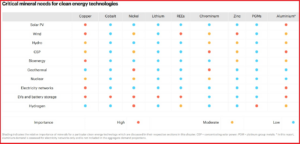
The International Energy Agency estimates that demand for rare earth elements used in clean energy technologies could more than triple by 2040 under current energy transition scenarios, while demand for magnet rare earths such as neodymium, praseodymium, dysprosium and terbium is projected to rise even faster.
For Viridis, securing long-term offtake agreements with Western manufacturers will be critical to unlocking project financing and transforming Colossus into one of the most significant rare earth developments outside China. The company’s latest move underscores how the battle for critical minerals has increasingly become a contest not only over resources, but also over who controls the supply chains that power the technologies of the future.