
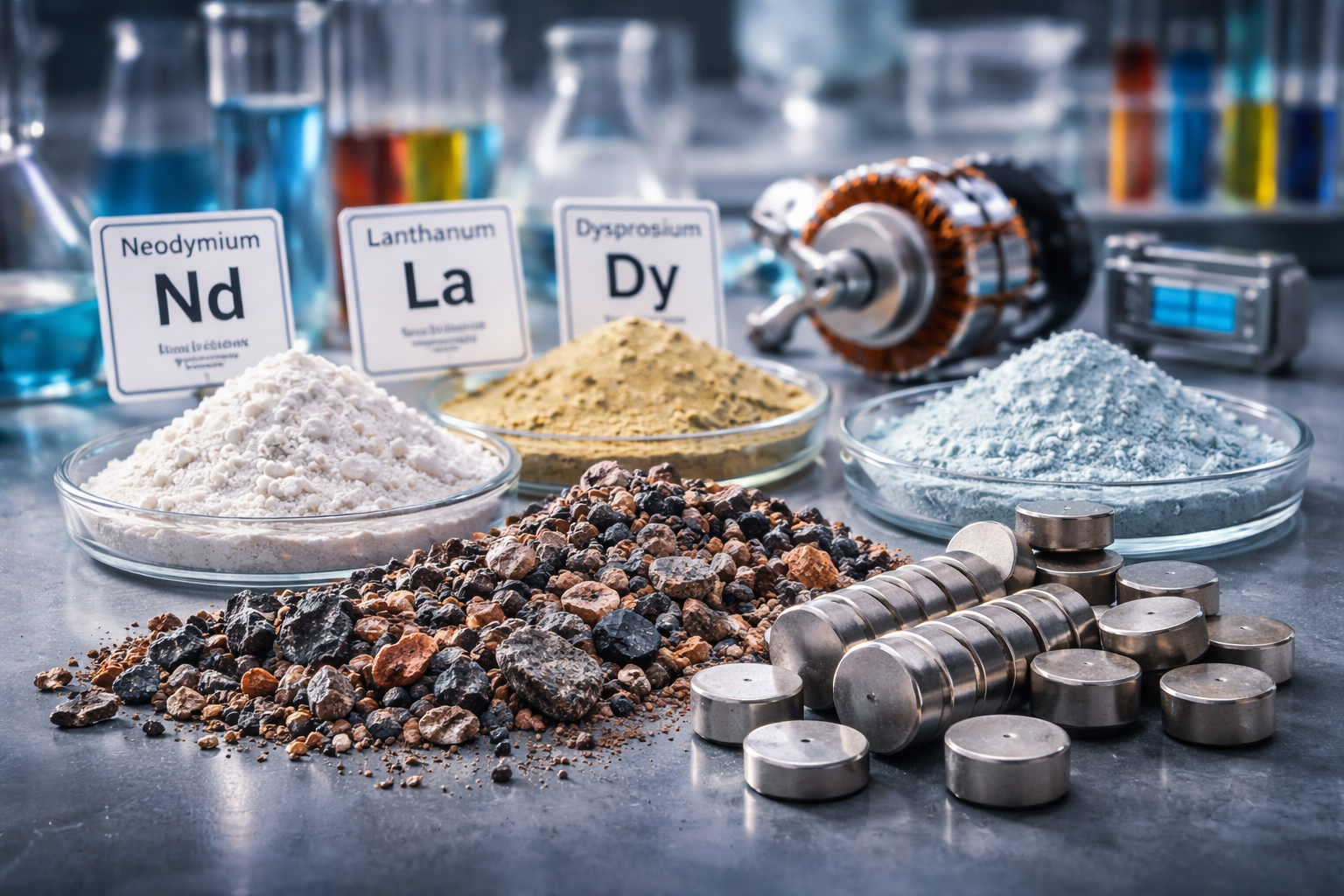
Critical minerals have become one of the most important geopolitical and economic assets of the 21st century, driving competition among major powers including the United States, China, the European Union, India and Japan.
These minerals are considered “critical” not because they are necessarily rare, but because modern economies cannot function without them and disruptions to their supply can have significant economic, industrial and national security consequences. The exact list differs across countries, but generally includes lithium, cobalt, nickel, copper, graphite, manganese and rare earth elements such as neodymium and dysprosium.
Their strategic importance has grown rapidly as the world undergoes what policymakers call the “twin transition” — the shift towards clean energy and digital technologies.
According to the International Energy Agency (IEA), clean-energy technologies require substantially more mineral inputs than conventional technologies. “A typical electric car requires six times the mineral inputs of a conventional car,” while “an onshore wind plant requires nine times more mineral resources than a gas-fired plant” of similar capacity.
This explains why minerals that once attracted limited public attention are now central to industrial policy and foreign affairs.
Critical minerals are embedded in almost every technology expected to drive future economic growth.
Lithium, cobalt, nickel and graphite are essential for electric vehicle batteries and energy storage systems. Copper is indispensable for power grids, charging infrastructure and data centres. Rare earth elements are used in permanent magnets found in wind turbines, electric motors, advanced electronics and military equipment. Gallium, germanium and silicon play important roles in semiconductors and solar panels.
As artificial intelligence expands, demand is expected to rise further because data centres, semiconductor fabrication plants and advanced computing systems require large quantities of these materials.
Why Are They Called “Critical”?
A mineral becomes critical when two conditions exist simultaneously:
First, it has high economic importance. Industries cannot easily replace it without affecting performance or cost.
Second, its supply is vulnerable to disruption. Risks may arise from geological scarcity, geopolitical tensions, export restrictions, environmental regulations or excessive market concentration.
The International Energy Agency has repeatedly warned that concentration in critical mineral supply chains creates significant vulnerabilities. IEA Executive Director Fatih Birol said: “Critical mineral supply chains can be highly vulnerable to supply shocks,” noting that disruptions can raise costs and reduce industrial competitiveness.
China’s Dominance
The biggest concern for Western governments is not mining alone but control over processing and refining.
Many countries possess mineral deposits, but China dominates the downstream stages that convert raw ore into usable industrial materials.
According to the IEA, more than 40 per cent of global refining and processing capacity for key minerals such as copper, lithium, cobalt and rare earth elements is concentrated in China.
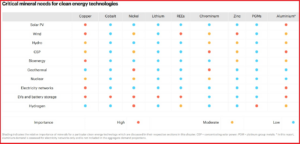
China’s influence is even stronger in some specialised sectors. Reuters reported that China controls an average market share of about 70 per cent across 19 of the world’s 20 most strategic critical minerals and about 94 per cent of the rare-earth permanent magnet market.
This dominance gives Beijing significant leverage over industries ranging from electric vehicles and renewable energy to defence systems and semiconductor manufacturing.
Why Governments Are Racing To Secure Supplies
The transition to clean energy is expected to trigger a dramatic surge in demand.
Research cited by Columbia University’s Center on Global Energy Policy projects that demand for critical minerals used in electric vehicles alone could rise nearly 300-fold between 2020 and 2050 under net-zero scenarios. Collectively, demand for key minerals needed for low-carbon technologies could increase almost twenty-fold during the same period.
The IEA has also warned that current supply chains remain heavily concentrated despite efforts at diversification. By 2035, the top three suppliers are still expected to control roughly 82 per cent of refined mineral supplies globally.
This is why countries are increasingly treating critical minerals as a strategic resource comparable to oil in the 20th century. Governments are signing bilateral agreements, funding new mining projects, building refining facilities and creating strategic partnerships to reduce dependence on single suppliers.
For policymakers today, control over critical minerals is no longer merely an industrial issue. It has become a matter of economic security, technological leadership, energy transition and geopolitical influence.
 Arun Nag