
India has taken a significant step toward self-reliance in critical materials by laying the groundwork for a domestic ecosystem for Rare Earth Permanent Magnets (REPMs), as part of a broader push to strengthen its position in advanced materials value chains, according to an official statement issued on Tuesday.
The initiative combines domestic manufacturing incentives with infrastructure development. The ₹7,280 crore REPM Manufacturing Scheme, together with the Union Budget 2026–27 announcement of Dedicated Rare Earth Corridors, is aimed at creating an integrated framework covering mining, processing, research and manufacturing.
As part of the Budget proposals, Dedicated Rare Earth Corridors will be developed in Odisha, Kerala, Andhra Pradesh and Tamil Nadu. These corridors are intended to support end-to-end capabilities in rare earth extraction and value addition, spanning mineral processing, applied research and downstream manufacturing.
Dedicated corridors
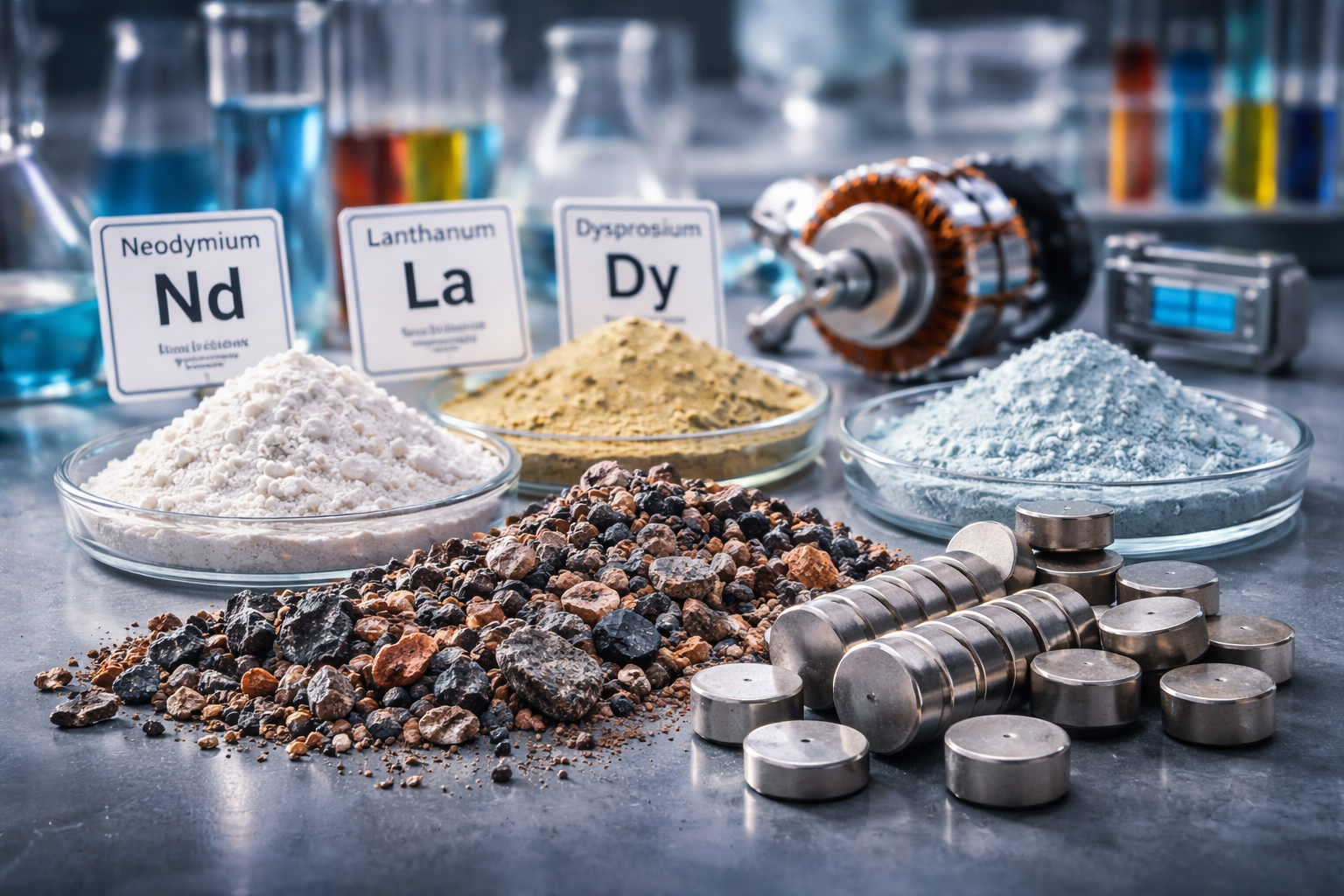
Rare Earth Permanent Magnets are among the strongest known permanent magnets, valued for their high magnetic strength, stability and compact size. These properties make them essential components in a wide range of advanced applications, including electric vehicle motors, wind turbine generators, consumer and industrial electronics, aerospace systems, defence equipment and precision sensors.
India has a substantial rare-earth resource base that provides a strong foundation for building domestic downstream industries. The country holds an estimated 13.15 million tonnes of monazite, containing about 7.23 million tonnes of rare-earth oxides (REO). These deposits are spread across several States, including Odisha, Kerala, Andhra Pradesh, Tamil Nadu, West Bengal, Gujarat, Maharashtra and Jharkhand, and are found in coastal beach sands, teri or red sands, and inland alluvial formations.
In addition, Gujarat and Rajasthan together account for about 1.29 million tonnes of in-situ REO resources identified in hard-rock areas. The Geological Survey of India has further expanded the resource base, identifying 482.6 million tonnes of rare-earth ore resources across 34 exploration projects.
Manufacturing still at nascent stage
Despite this resource advantage, domestic manufacturing of rare earth permanent magnets remains at a nascent stage. India continues to rely heavily on imports, primarily from China, which accounted for nearly 60–80 per cent of the value and 85–90 per cent of the quantity of REPM imports between 2022 and 2025.
The government has flagged growing urgency to address this dependence. Consumption of REPMs is expected to double by 2030, driven by rapid growth in electric mobility, renewable energy, electronics and defence sectors.
Officials said expanding domestic REPM manufacturing capacity is critical not only to reduce import reliance but also to ensure long-term supply security and strategic self-reliance in technologies that are increasingly central to India’s industrial and energy transition.