
The new year has begun with a stark reminder that critical minerals are no longer a background concern of industrial policy but a central driver of global geopolitics. As Jack Lifton, co-chairman of the Critical Minerals Institute, put it bluntly, the era of coordination is fading. “This isn’t coming, it’s already happening… It’s every nation for itself.”
That assessment has gained weight in recent days as Beijing, Washington and European capitals have moved almost simultaneously to shore up control over the materials that underpin modern economies, from rare earths and lithium to copper, tungsten and cobalt.
China has set the tone. In early January, authorities in Beijing effectively froze export licence approvals for rare earth shipments to Japan, following Tokyo’s curbs on the sale of dual-use technologies to China. Japanese manufacturers across multiple sectors reported abrupt suspensions of deliveries of heavy rare earths and magnet materials, despite Chinese assurances that civilian industries would not be affected. The episode has revived memories of China’s 2010 embargo on Japan, when rare earth exports were used as leverage during a diplomatic dispute.
Beyond rare earths, strategic metals come under watch
The squeeze has not been limited to rare earths. Beijing has also imposed tighter export controls across a range of strategic metals, naming just 44 companies authorised to export silver in 2026–27, alongside sharply limited exporters for tungsten and antimony. Silver, now designated a critical mineral by the United States and essential for solar panels and electronics, fell under a new licensing regime from January 1, 2026, a move widely interpreted as another step in China’s increasingly explicit management of resource flows for strategic effect.
European anxiety has followed quickly. France’s aerospace industry lobby warned this week that roughly 90% of its rare earth requirements are sourced from China, describing the dependence as a strategic vulnerability. Industry leaders have voiced concern over what they call “intrusive” Chinese questioning around the end use of rare earth permanent magnets such as samarium–cobalt, which are vital for jet engines and missile systems. The message from Beijing, as many in Europe see it, is that supply chains can be calibrated to geopolitical interests.
Western governments are now scrambling to respond. On January 12, U.S. Treasury Secretary Scott Bessent is convening finance ministers from the Group of Seven, the European Union, Australia, India, South Korea and Mexico, a grouping that represents around 60% of global critical mineral demand. According to U.S. officials, Bessent has grown frustrated with what he describes as a lack of urgency since a G7 action plan was agreed last summer.
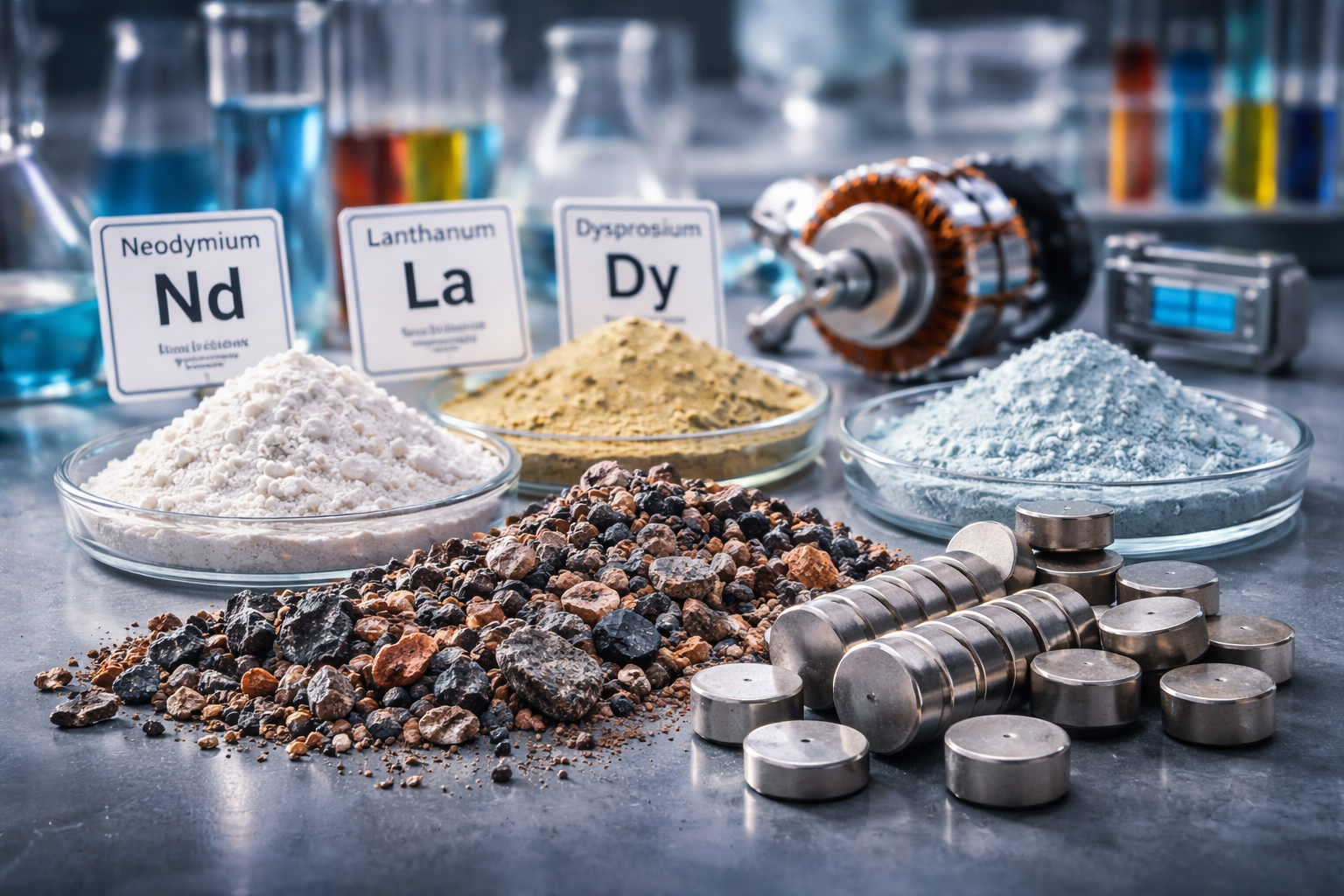
Policy options on the table include coordinated stockpiles, pooled investment vehicles and price floors to support non-Chinese supply. The latter has already been tested in the United States, where the Department of Defense has guaranteed minimum prices in select domestic rare earth contracts. Australia is advancing a similar approach, with a proposed Critical Minerals Strategic Reserve designed to underwrite investment in rare earth magnet materials such as neodymium, praseodymium, dysprosium and terbium through price guarantees to reduce volatility.
G7 to ponder crisis
In the United States, resource nationalism has taken a more overt political form. The Trump administration has moved to reverse a Biden-era ban on mining in parts of northern Minnesota, aiming to unlock domestic copper, nickel and cobalt deposits in the Duluth Complex. The effort could revive the long-delayed Twin Metals project, owned by Antofagasta, which sits atop one of the largest undeveloped polymetallic resources in North America. Supporters argue that sourcing battery and electrification metals at home is preferable to relying on foreign suppliers, particularly China.
Washington is also pushing hard on nuclear fuel security. The Department of Energy has awarded $2.7 billion in contracts to expand domestic uranium enrichment capacity, targeting both conventional reactor fuel and high-assay low-enriched uranium (HALEU). The move is intended to end reliance on Russia, currently the only commercial supplier of HALEU, ahead of a congressional ban on Russian uranium imports due to take effect by 2028.
Beyond the headline metals, attention is spreading to less visible but no less critical materials. Tungsten, essential for cutting tools and armour-piercing munitions, remains heavily dominated by Chinese supply. Lewis Black, chief executive of Almonty Industries, has described China’s export quotas as a wake-up call, noting that “there is no substitute for tungsten in most applications.”
Strategic Stakes for US, Japan, EU
Market signals underline the strategic stakes. Copper prices surged more than 35% in 2025, topping $12,000 a tonne amid supply disruptions and electrification-driven demand. Lithium, after a sharp downturn, has rebounded as grid-scale battery storage booms, with analysts forecasting a potential market deficit as early as 2026. Meanwhile, cobalt supply has been jolted by export bans and quotas in the Democratic Republic of Congo, which supplies around 70% of global output.
Even tentative diplomatic thaws offer limited comfort. Despite a US, China understanding reached in October on rare earth trade, American manufacturers report continued difficulty accessing upstream materials, even as finished magnet exports resume. Customs data suggest Beijing is easing pressure selectively, maintaining leverage over the most strategic links in the supply chain.
Taken together, the early signals of 2026 point to a world in which critical minerals are treated less as commodities and more as instruments of state power. Governments are stockpiling, underwriting prices, rewriting mining rules and forging alliances, while markets react with volatility and rising costs.
As Lifton has long argued, the shift away from globalization is no longer theoretical. Control over metals, from copper and lithium to rare earths and tungsten — is fast becoming one of the defining fault lines of the global economy.
 Sridhar P