
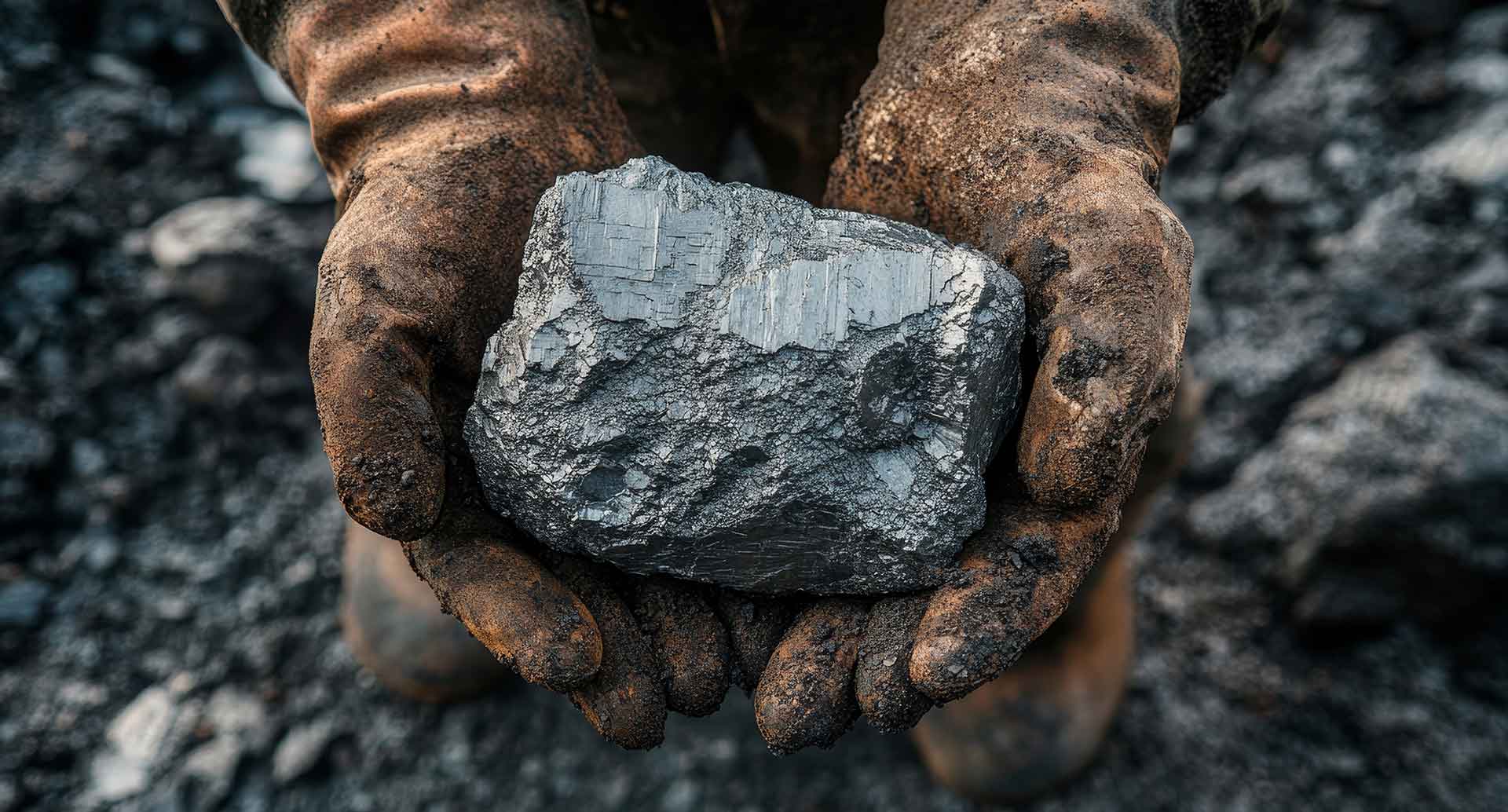
A Global Race Beneath Swedish Rock
Rare earths have become a geopolitical flashpoint. The materials are essential to smartphones, electric vehicles, wind turbines, refrigerators, speakers and advanced military systems. China’s near-total dominance of both raw materials and finished products has drawn sharp criticism from the European Union, which last year accused Beijing of “weaponising” its control over supply chains.
China’s readiness to impose export restrictions has already fuelled trade tensions with the US, including the bruising tariff standoff under Donald Trump. Those same pressures are now shaping Washington’s renewed interest in Greenland, home to significant untapped rare earth reserves.
In Kiruna, state-owned miner LKAB is drilling steadily toward the Per Geijer deposit — a magnetite-hematite-phosphate formation identified more than a century ago by Swedish geologist Per Geijer. The ore body lies roughly two kilometres from the town’s existing iron ore mine, and connecting the two is no small task.
Miners now work at depths of 900 metres and 1.3 kilometres, navigating an expanding network of tunnels that already stretches four kilometres underground.
Blasting Through The Silence
Each night, between 1.15am and 1.45am, explosives are detonated deep below Kiruna. Using remote systems, engineers drill a fan of 84 holes into the rock face, load them with charges, and blast. The explosions are powerful enough to occasionally rattle buildings on the surface and have contributed to ground subsidence.
Jim Lidström, a 37-year-old Kiruna native who leads the tunnelling team, says they work from a control room 1.3 kilometres below ground. From modern consoles, they remotely “scale” the rock face, breaking loose material into manageable chunks. The fragments are loaded onto skips and carried away by driverless trains.
Why Rare Earths Take So Long
The Per Geijer deposit contains all 17 rare earth elements, including neodymium and praseodymium, metals critical for high-strength permanent magnets used in electric cars, household appliances and fighter jets. But experts caution against expectations of quick results. Even where geology is favourable, moving from discovery to refined production can take 10 to 15 years.
“I think people often miss the point,” says Nigel Steward, a materials scientist at Imperial College London and a former executive in the US mining industry. “They ask why Europe doesn’t just produce rare earths. But you need the entire supply chain to make that happen.”
Kiruna’s experience underscores the scale of the challenge. China remains the dominant supplier of rare earth magnets and has demonstrated its willingness to restrict exports when it suits its political objectives.
A Late Awakening In Europe
The shift in attitudes has been slow. Mining fell out of political favour in Europe just as China’s urbanisation boom drove global demand for metals through the roof. LKAB has already attracted attention from Brussels, including a visit by industry commissioner Stéphane Séjourné, reflecting Kiruna’s status as the EU’s most credible near-term hope of reducing dependence on Chinese supply chains.
To accelerate progress, LKAB has invested €80 million in a demonstration plant in Luleå to test separation techniques before full-scale mining begins. The company has also taken a stake in Norwegian refiner REEtec, aiming to develop cleaner methods of processing rare earths.
Despite the name, rare earths are not scarce. They are spread thinly through the Earth’s crust, often like crumbs embedded in rock. What makes them “rare” is the difficulty required to extract and separate them, a process that can take a decade or more.
For now, China still holds most of the cards. According to Darren Wilson, head of LKAB’s industrial minerals division, China controls about 85% of light rare earth processing and 100% of heavy rare earths. European Commission officials estimate the EU consumes around 20,000 tonnes of permanent magnets annually, with up to 18,000 tonnes sourced from China, a dependency widely viewed as a strategic risk.
China’s export restrictions last year, imposed amid renewed trade hostilities with the US, sent shockwaves through Europe’s car industry. Although a temporary truce was later agreed, the message was clear.
As trade adviser George Riddell puts it: China has not only the capacity to weaponise trade, it has shown the willingness to do so after denying rare earth materials to Japan. Next in line, Europe too hinges on what happens beneath the frozen ground of Kiruna, where a workforce of miners is quietly carving out what could become the continent’s first step toward rare earth independence.