
India’s effort to build a domestic rare earth permanent magnet manufacturing base is moving from policy intent to early execution, as the government sharpens its focus on reducing import dependence and securing supply chains vital for electric vehicles, renewable energy, defence and advanced electronics.
The Rs 7,280-crore incentive scheme to promote manufacturing of sintered rare earth permanent magnets (REPMs), cleared late last year, is now being positioned as a cornerstone of India’s broader critical minerals strategy. Officials say the programme is designed not only to cut reliance on imports—predominantly from China—but also to embed India more deeply into global advanced-materials value chains.
Under the scheme, the government aims to establish 6,000 metric tonnes per annum (MTPA) of integrated REPM manufacturing capacity, covering the entire value chain from rare earth oxides to finished magnets. Capacity will be allocated to five beneficiaries through global competitive bidding, with each firm eligible for up to 1,200 MTPA.
Of the total outlay, Rs 6,450 crore has been earmarked for sales-linked incentives to be disbursed over five years, while Rs 750 crore will be provided as capital subsidy. The implementation period spans seven years, including a two-year gestation phase followed by five years of incentive payouts.
“The scheme is designed to enhance competitiveness, attract technology-driven investment and support long-term scalability,” the government said in its official statement, adding that it would also contribute to India’s energy-transition goals and its Net Zero 2070 commitment.
Cutting dependence on China
The push comes against the backdrop of India’s heavy reliance on imported permanent magnets. Official data show that between 2022–23 and 2024–25, India sourced the bulk of its permanent magnet imports from China, with import dependence ranging from 59.6% to 81.3% by value and 84.8% to 90.4% by quantity.
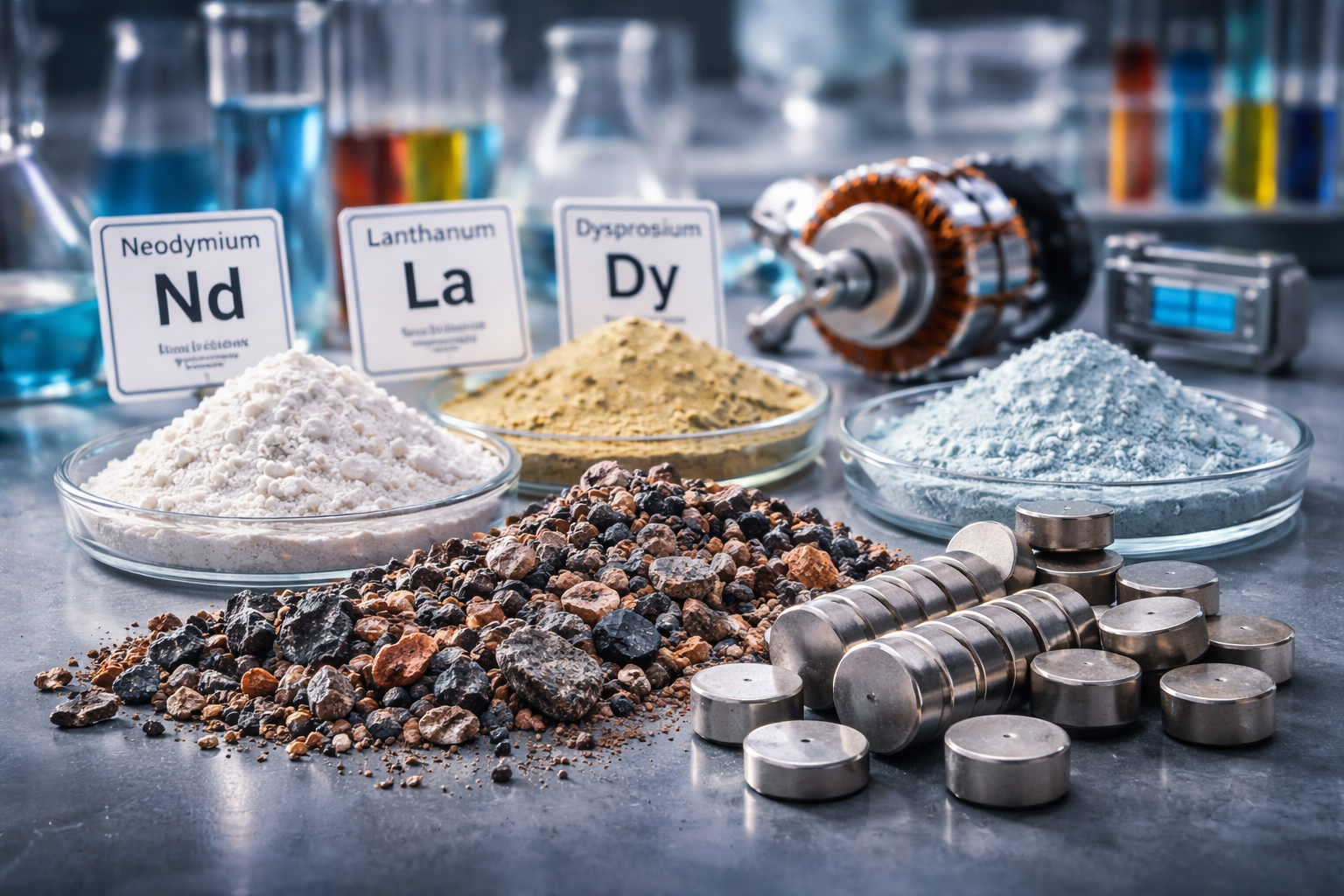
Rare earth permanent magnets are critical components in electric vehicle motors, wind turbine generators, consumer and industrial electronics, aerospace and defence systems, and precision sensors. As demand for EVs and renewable power accelerates, policymakers have flagged supply security for these magnets as a strategic priority.
Union Minister Ashwini Vaishnaw has said India could achieve self-reliance in rare earth magnet manufacturing within three to four years, reflecting official confidence that the incentive structure and competitive bidding process will attract capable players and advanced technology.
Industry executives say the scheme could catalyse the development of domestic clusters for advanced materials and components, generating employment and deepening manufacturing capabilities across the value chain, including among small and medium enterprises.
Linked to a wider minerals strategy
The REPM scheme is part of a broader policy framework that includes the National Critical Minerals Mission and reforms aimed at strengthening exploration, mining, processing, manufacturing and recycling. Officials see magnet manufacturing as a natural downstream extension of India’s existing capabilities in electronics and automotive production.
India has significant rare earth resources of its own, including monazite deposits spread across coastal and inland regions. However, converting these resources into commercially viable, environmentally compliant supply chains remains a technical and financial challenge.
To mitigate supply risks, the Ministry of Mines has signed bilateral agreements with mineral-rich countries such as Australia, Argentina, Zambia, Peru, Zimbabwe and Mozambique. India is also active in multilateral initiatives such as the Minerals Security Partnership and the Indo-Pacific Economic Framework, aimed at building more resilient global supply chains.
Officials say overseas partnerships are meant to complement domestic manufacturing by ensuring access to raw materials while value addition increasingly happens within India.
Challenges ahead
Despite the policy momentum, analysts caution that execution will be key. Scaling up integrated magnet manufacturing requires access to technology, skilled manpower and consistent feedstock supply, areas where China still enjoys a significant lead.
Domestic producers will also need to navigate environmental clearances, financing and global competition. Recycling and secondary recovery from e-waste are being explored as additional avenues to supplement primary supply and improve resilience.
Still, policymakers argue that the magnet scheme represents one of India’s most targeted interventions in the critical minerals space, focusing on a high-value downstream product rather than a diffuse set of materials.
If delivered as planned, the initiative could significantly reduce India’s exposure to external supply shocks and support the rapid expansion of clean-energy and high-technology sectors—an outcome New Delhi increasingly views as central to economic and strategic security.