
The United States is intensifying efforts to secure rare earth supply chains outside China, pressing ahead with allied coordination, investment commitments and discussions on market interventions as concerns grow over Beijing’s dominance of minerals critical to defense, clean energy and advanced manufacturing.
As preparations begin for the 2026 G7 summit on January 12, 2026, rare earths have emerged as a key test of whether advanced economies can translate shared concern into collective action, or whether fragmentation will leave existing supply dynamics largely unchanged.
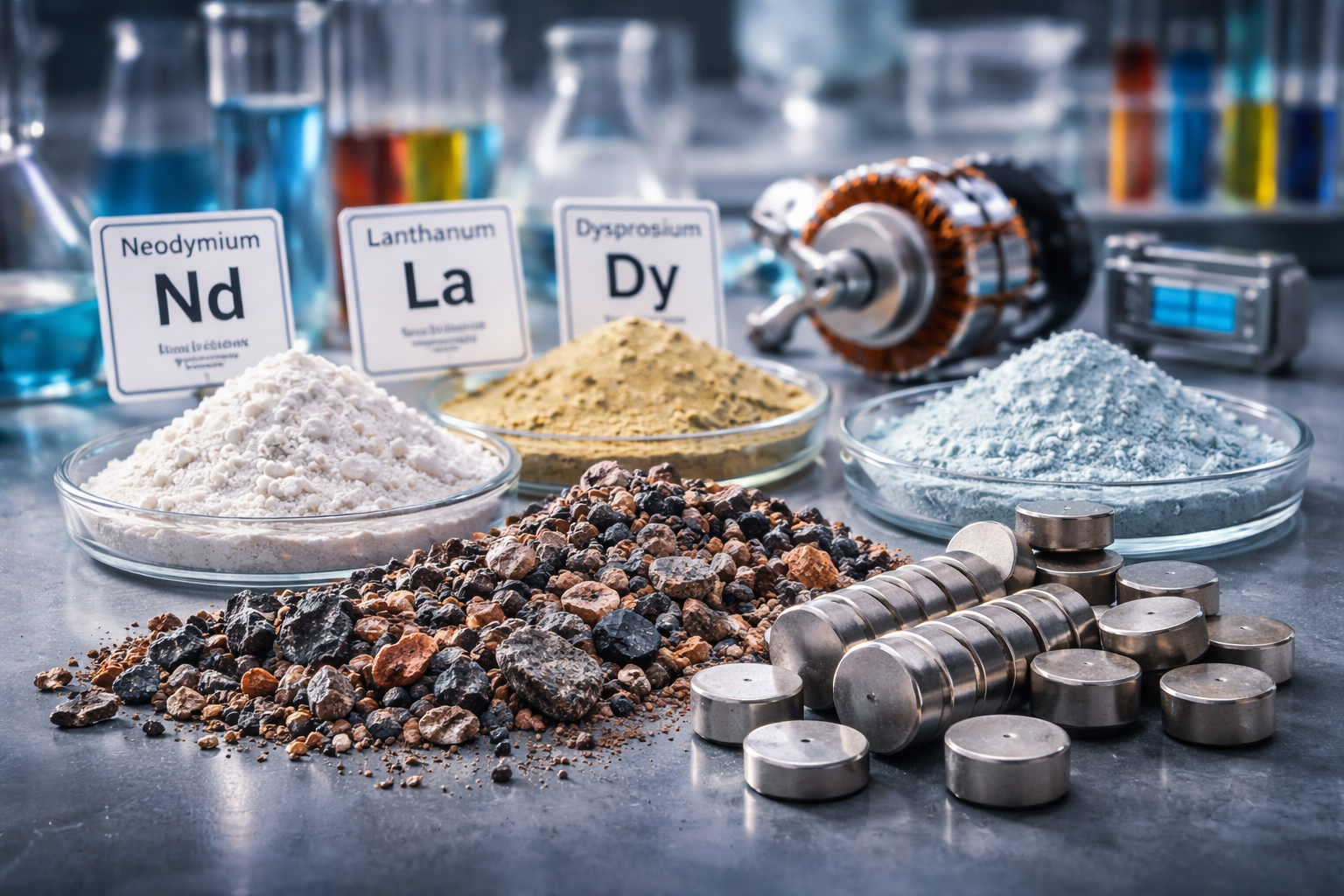
Rare earth elements, a group of 17 minerals used in electric vehicles, wind turbines, consumer electronics and military systems, have moved to the center of economic security planning in Washington and other advanced economies. China controls the bulk of global processing capacity, a concentration U.S. officials say leaves supply chains exposed to geopolitical shocks.
The push gathered momentum at the 2025 summit of the Group of Seven in Kananaskis, Canada, where leaders launched a Critical Minerals Action Plan and a Canada-led production alliance aimed at diversifying supplies of rare earths and other strategic materials. Since then, G7 governments and partners have mobilized more than $6.4 billion across 26 mining, processing and recycling projects, according to officials familiar with the initiative.
Beyond extraction
Those projects include rare earth processing facilities in Ontario backed by U.S. and German financing, Canadian graphite and rare earth mines with Japanese and European offtake agreements, and investments involving the United Kingdom, Italy and Australia. U.S. officials say the focus has shifted beyond extraction to downstream capabilities such as refining, separation and magnet manufacturing, where China’s grip is strongest.
“Mining alone does not solve the problem,” a U.S. official involved in allied talks said. “The vulnerability sits in processing and advanced materials, and that is where coordination matters most.”
Beyond investment, G7 governments are debating more assertive tools to counter what some describe as non-market practices by China. Officials are weighing proposals including minimum price floors to support non-Chinese producers, joint stockpiles of critical rare earths, tighter screening of foreign investment and, in some cases, tariffs aimed at preventing price undercutting.
China’s Export Controls
China has previously defended its role in the sector, saying its export controls and industrial policies are consistent with national security needs and international rules. But recent Chinese restrictions on certain dual-use items and strategic materials have sharpened concerns among manufacturers and policymakers in the United States, Europe and Japan.
Despite the flurry of announcements, analysts caution that execution remains uneven. Many projects are still at early stages and face lengthy permitting, environmental and technical hurdles. Proposals for collective stockpiles or coordinated price mechanisms remain under discussion, with no binding agreements in place.
Most G7 economies, with the partial exception of Japan, continue to rely heavily on Chinese supplies, particularly of heavy rare earths used in high-performance magnets. Industry executives warn that replacing that capacity will take years and sustained policy support.
“Capital is moving, but demand is rising just as fast,” said an executive involved in rare earth processing projects in North America. “Without coordination on the market side, China’s leverage remains significant.”
U.S. officials acknowledge that China will remain a major player in rare earth markets for the foreseeable future. Still, they argue that even partial diversification would reduce exposure to sudden disruptions and strengthen bargaining power as global demand accelerates from electric vehicles, renewable energy systems and defense applications.