
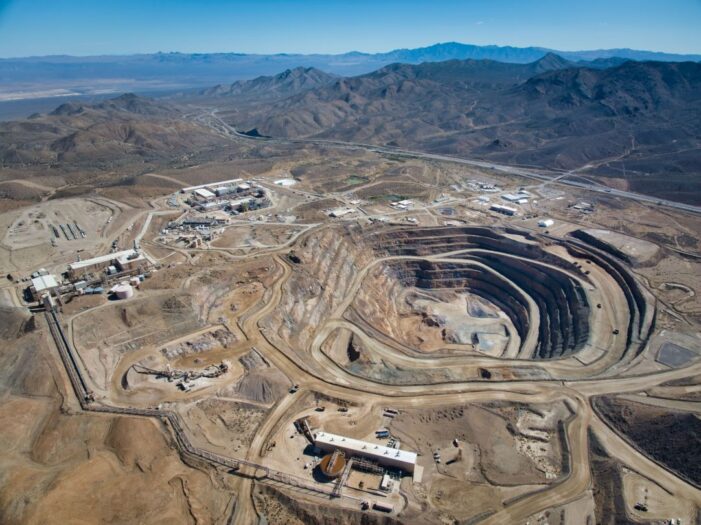
Intensifying global race for critical minerals, two competing narratives unfolded this week on opposite sides of the Pacific. While Chinese authorities celebrated the discovery of massive rare earth, fluorite, and antimony reserves, strengthening Beijing’s grip on high-tech supply chains, Canadian officials at the world’s largest mining convention unveiled a C$1.5 billion infrastructure fund designed to fast-track domestic mines to market and reduce Western dependence on Chinese-controlled resources.
The dueling announcements underscore a fundamental geopolitical reality: critical minerals have become the fulcrum of the US-China tech rivalry, and nations are scrambling to secure their positions before supply chains crystallize along rival blocs.
China’s ‘Super-Large’ Discovery
Chinese authorities have confirmed that the Maoniuping mine in Mianning county, Sichuan province, now holds approximately 9.67 million tonnes of rare earth oxides (REOs) , bringing total confirmed reserves to 10.4 million tonnes—a more than 200 per cent increase that ranks the site as the world’s second-largest light rare earth deposit after Inner Mongolia’s Bayan Obo mining district.
The geological survey also identified 27.13 million tonnes of fluorite and 37.22 million tonnes of baryte, both classified as “super-large” deposits under Chinese standards.
Wang Denghong, Director of the Institute of Mineral Resources at the Chinese Academy of Geological Sciences, described the findings as “stunning” in an interview with state news agency Xinhua. He emphasized the strategic importance of fluorite, a critical input for semiconductor manufacturing and lithium-ion batteries.
“Fluorite plays an important role in the semiconductor and lithium-ion battery industries,” Wang said, noting its role as the primary source of fluorine used for etching silicon wafers.
Regarding baryte, which is essential for oil and gas drilling operations, Wang added: “Without baryte, oil and gas exploration and production would grind to a halt, and the extraction of shale oil and gas would be out of the question.”
In a separate development, authorities in Gansu province reported an additional 51,455 tonnes of antimony in Tanchang county—a mineral critical for flame retardants in electronics and as a hardening agent in military applications such as ammunition and armor plating. The Gansu Provincial Department of Natural Resources confirmed the discovery increases the area’s proven antimony reserves “by more than half.”
Export Controls Tighten Beijing’s Leverage
The discoveries come amid an increasingly sophisticated Chinese export control regime. In 2025, Beijing implemented sweeping restrictions requiring export licenses for rare earth elements and permanent magnets. A “50 per cent penetration rule” now extends extraterritorial jurisdiction, requiring foreign manufacturers to obtain Chinese licenses if their products contain Chinese-origin rare earth materials above a 0.1 per cent value threshold.
The impact is evident in trade data. Customs figures released Friday show Chinese rare earth permanent magnet exports to the United States fell 22.5 per cent in January–February 2026 compared to the same period last year, totaling just 994 tonnes. Meanwhile, shipments to the European Union surged 28.4 per cent to 4,775 tonnes, a bifurcation that reflects Beijing’s strategy of punishing Washington while rewarding European partners.
Canada’s C$1.5B ‘First and Last Mile’ Infrastructure Fund
Thousands of kilometers away in Toronto, where the Prospectors & Developers Association of Canada (PDAC) convention is underway, Canadian officials struck a decidedly different tone.
Speaking from the podium at the PDAC convention on March 5, 2026, federal Energy and Natural Resources Minister Tim Hodgson announced a C$1.5 billion First and Last Mile Infrastructure Fund aimed at connecting critical mineral mines to roads, power grids, and transportation networks.
“We cannot afford to have world-class critical mineral deposits sitting in the ground while our allies wait for supply,” Hodgson told the audience of mining executives, investors, and international delegates. “This fund is about closing the gap between resource potential and market reality. We are building the bridges that will bring Canadian critical minerals to the world.”
The fund, which will be administered through Natural Resources Canada’s Critical Minerals Infrastructure Program, targets projects that address the most persistent bottleneck in Canadian mining: the lack of transportation and energy infrastructure in remote northern regions where many critical mineral deposits are located.
Hodgson emphasized that the initiative is designed to accelerate projects from exploration to production, reducing the typical 10- to 15-year development timeline for new mines.
“Our allies are looking for reliable, democratic supply chains,” Hodgson said. “Canada has the geology, the expertise, and the values. What we need is the infrastructure to move resources from the ground to the global market. That is what this fund delivers.”
Ontario Launches Critical Minerals Strategy Consultations
Hodgson’s federal announcement was followed by provincial commitments. Stephen Lecce, Ontario’s Minister of Energy and Mines, confirmed that the province will begin consultations on an updated critical minerals strategy, with a focus on streamlining permitting, expanding processing capacity, and aligning with federal infrastructure investments.
“Ontario is already home to one of the most robust critical minerals ecosystems in North America,” Lecce said in his address at PDAC. “But we need to move faster. We are launching consultations to ensure our strategy reflects the urgency of this moment. We cannot let bureaucratic delays stand in the way of economic sovereignty. ”
Lecce noted that Ontario’s Ring of Fire region, a vast deposit of chromite, nickel, copper, and platinum group metals in the province’s northwest, remains a priority, and the province is working with First Nations communities and industry partners to advance development.
The announcements at PDAC come at a pivotal moment for the global mining industry. The convention, which draws over 25,000 delegates annually, has increasingly become a forum for geopolitical discussions as governments recognize the strategic importance of mineral security.
This year’s theme, “Building Resilient Supply Chains,” reflects the industry’s shift from purely commercial considerations to national security imperatives. Sessions have focused on critical minerals processing, supply chain diversification, and the role of mining in the energy transition.
US officials are also present in force, with a delegation from the Department of Energy and the US Geological Survey participating in discussions on North American supply chain integration under the USMCA framework.
The Geopolitical Chessboard
The juxtaposition of China’s discovery announcement and Canada’s infrastructure fund highlights the divergent strategies emerging in the global critical minerals landscape:
| China | Canada |
|---|---|
| Leverages vast domestic reserves and advanced processing capacity | Develops new supply sources with democratic governance |
| Uses export controls as geopolitical leverage | Focuses on infrastructure to unlock remote deposits |
| Maintains 85–90% of global rare earth processing | Builds processing capacity through strategic partnerships |
| Targets US supply chains while rewarding European allies | Aligns with US, Europe, and Japan under Minerals Security Partnership |
Despite efforts by Washington to rebuild domestic rare earth supply chains, the US remains heavily dependent on Chinese processing. The US has only one operational rare earth mine, Mountain Pass in California, which lacks the capacity to process its own ore into separated rare earth oxides. The ore is currently shipped to China for processing, creating a structural vulnerability that US officials are racing to address.
Industry analysts estimate that building a fully integrated rare earth processing industry in the US would require approximately $5 billion in investment and at least eight years, along with a specialized workforce that is currently concentrated in China.
Canada’s Strategic Positioning
Canada has positioned itself as a critical minerals partner of choice for the US and its allies. The country is home to significant deposits of lithium, nickel, cobalt, copper, rare earths, and graphite, all essential for electric vehicle batteries, defense systems, and advanced electronics.
The C$1.5 billion infrastructure fund complements existing federal initiatives, including the C$3.8 billion Critical Minerals Strategy announced in 2024, which focuses on exploration, processing, manufacturing, and recycling.
However, industry observers note that Canada faces significant challenges, including lengthy permitting processes, Indigenous consultation requirements, and the high cost of developing mines in remote regions.
In a briefing following the discovery announcement, a spokesperson for China’s Ministry of Natural Resources framed the findings as a matter of national strategic security.
“These new findings significantly strengthen China’s resource security for critical minerals essential to high-tech, new energy, and national defence sectors,” the spokesperson said. “Securing our domestic supply chain for these strategic resources is a top priority. We are advancing exploration to ensure that China’s industrial and technological development rests on a solid, self-reliant foundation.”
Urgency of Canada’s Investments
Canada’s minister Tim Hodgson, in his PDAC address, said: “We are in a global competition for capital, talent, and supply chain security,” Hodgson said. “China has made its intentions clear. They are securing their supply chain and leveraging it geopolitically. Canada and our allies need to do the same. This fund is a down payment on that effort.”
Asked about China’s discovery in Sichuan, Hodgson acknowledged the scale of the challenge but emphasized Canada’s competitive advantages.
“China has enormous resources and has been investing in this space for decades. We respect that,” he said. “But Canada has what the world needs—high-quality deposits, strong environmental and governance standards, and trusted partnerships with allies. We don’t need to out-produce China. We need to provide reliable, transparent alternatives that our allies can count on. ”
Another minister, Stephen Lecce, speaking to reporters at PDAC, emphasized the importance of speed and coordination. “The window for securing critical minerals supply chains is closing,” Lecce said. “Our competitors are moving fast. We need to move faster. Ontario is ready to do its part, and our updated strategy will reflect the urgency of this moment.”
Analysts see the current trajectory leading toward a bifurcated global critical minerals market, one centered on China and its Belt and Road partners, and another anchored by North America and its allies.
“We’re likely entering a period of structural bifurcation, with China localizing its value chain and the US and allies accelerating their own,” a rare earth industry analyst told Reuters following China’s October 2025 export control expansion.
While China’s new discoveries reinforce its supply security, the more significant advantage remains in processing. China controls approximately 85–90 per cent of global rare earth processing capacity, a gap that Western nations are only beginning to address.
The US Department of Defense has invested in domestic processing projects, including MP Materials’ Mountain Pass facility and Lynas Rare Earths’ Texas processing plant. However, analysts estimate that achieving meaningful processing capacity outside China will take at least five to seven years.
Implications for India and Other Nations
For India and other nations seeking to develop their own high-tech and green energy sectors, the intensifying US-China rivalry over critical minerals creates both challenges and opportunities. India has launched its own critical minerals mission, identifying 30 minerals as strategic and auctioning mining blocks to reduce import dependence.
However, with China controlling vast reserves and processing capacity, and the US and Canada building alternative supply chains, nations outside these blocs may face difficult choices about which supply chain to integrate with.
The simultaneous announcements from Beijing and Ottawa encapsulate the defining geopolitical dynamic of the critical minerals era. China, leveraging its massive domestic reserves and advanced processing infrastructure, is doubling down on supply chain dominance. Canada, supported by the United States and other allies, is investing heavily to build alternative, transparent supply chains that can compete with Chinese dominance.
As Minister Hodgson put it in his PDAC address: “This is not just about mining. It is about sovereignty, security, and the future of the industries that will define the 21st century.”
With the US-China tech race intensifying and global demand for critical minerals set to quintuple by 2040, the competition for supply chain control is only beginning.

As China Locks in ‘Super-Large’ Mineral Reserves, Canada Unveils C$1.5B Fund to Mine Rare Earths added by Sridhar P on
View all posts by Sridhar P →