
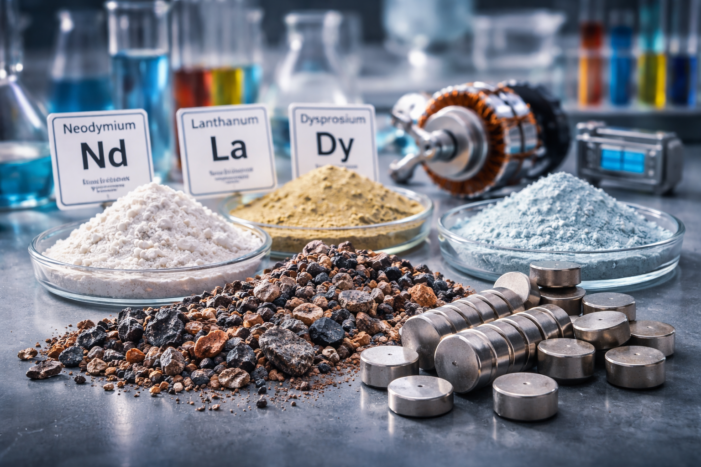
Australia-listed Lynas Rare Earths has moved closer to securing a key role in the United States’ defence supply chain after signing a binding letter of intent with the US Department of War for the supply of rare earth oxides.
The agreement, signed via its subsidiary Lynas USA, outlines a proposed $96 million commitment by the U.S. government over four years to procure both light and heavy rare earth oxide products. The deal is aimed at strengthening domestic access to critical materials used in advanced defence manufacturing.
Under the terms being discussed, the arrangement includes a floor price of $110 per kilogram for neodymium-praseodymium (NdPr) oxide—one of the most commercially significant rare earth compounds used in high-performance magnets.
Chief Executive Amanda Lacaze said the agreement would help ensure continued access to materials essential for modern industrial and defence applications. Rare earth oxides are key inputs in systems ranging from fighter aircraft and missile guidance technologies to advanced electronics.
The latest development follows a revision of an earlier agreement between Lynas and the U.S. government, amid uncertainty surrounding the planned construction of a heavy rare earth processing facility in Seadrift, Texas. Discussions between the two sides are ongoing, including the possibility of expanding supply volumes of heavy rare earth oxides.
Separately, Lynas recently signed a long-term offtake agreement with Japan Australia Rare Earths, which negotiates on behalf of Japanese companies. The deal covers at least 5,000 tonnes per year of NdPr oxide through 2038, also at a floor price of $110/kg.
The twin agreements underscore Lynas’ growing strategic importance as Western economies seek to diversify rare earth supply chains and reduce reliance on China, which continues to dominate global processing capacity.
Industry analysts say such partnerships are critical as governments look to secure stable access to materials essential for defence systems, clean energy technologies and high-end manufacturing.
Amanda Lacaze, Australia, Lynas, rare earths supply US defense, talks

Lynas Nears Deal to Supply Rare Earths to US Defense Sector in $96 Million Push added by Sridhar P on
View all posts by Sridhar P →