
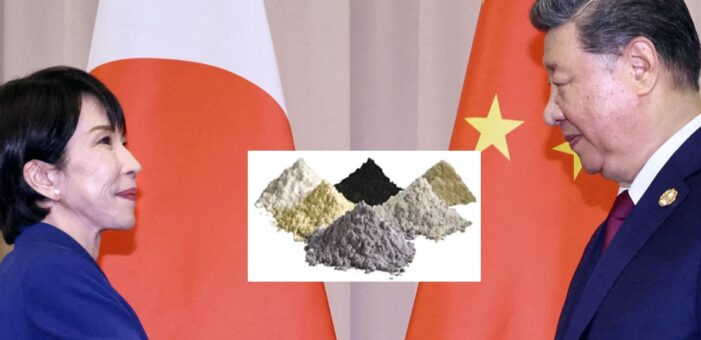
China’s dominance over critical minerals has moved from an industrial concern to a strategic flashpoint, as Western governments accuse Beijing of using state-backed pricing power to distort global markets and squeeze out competitors.
At the centre of the debate is China’s overwhelming control across the supply chain for minerals essential to clean energy, electronics and defence, including rare earth elements, lithium, cobalt, graphite and copper. According to the International Energy Agency (IEA), refining and processing capacity for many of these materials is now heavily concentrated, with China emerging as the world’s largest refined supplier for several key minerals.
The IEA estimates that the top three refined suppliers accounted for about 86% of global supply in 2024, up from around 82% in 2020, and has warned that China is likely to remain the dominant processor through the rest of the decade.
That concentration gives Beijing considerable pricing power. U.S. and allied officials argue that Chinese producers, often supported by state subsidies, low-cost financing from policy banks and preferential domestic regulations, are able to sell minerals at prices that undercut non-Chinese rivals. When prices fall, higher-cost producers elsewhere are forced to cut output or shut down entirely, allowing Chinese firms to consolidate market share.
China-Japan row over controls
Concerns intensified after Beijing imposed a series of export controls and licensing requirements on certain minerals and processed materials over the past few years. While Chinese authorities have described these steps as routine regulatory actions, policymakers in Washington and Tokyo say they demonstrate how quickly supply can be tightened, amplifying price volatility and disrupting downstream industries.
Japanese officials have repeatedly highlighted the economic risks. One government-backed analysis cited by policymakers estimated that a three-month disruption in rare-earth supplies could reduce Japan’s annual GDP by about 0.11 percentage points, underscoring the vulnerability of advanced manufacturing economies to supply shocks.
The issue has gained renewed attention in the United States following hearings by the U.S. House Select Committee on the Strategic Competition Between the United States and the Chinese Communist Party. In a recent hearing titled “Predatory Pricing: How the Chinese Communist Party Manipulates Global Mineral Prices to Maintain Its Dominance”, lawmakers argued that Beijing’s approach goes beyond conventional market competition.
The committee pointed to decades of industrial policy, state-directed expansion of processing capacity and selective export restrictions that, taken together, allow Chinese firms to price competitors out of the market. Analysts too acknowledge that China’s position is not solely the result of manipulation.
Chinese companies invested heavily in refining and processing when many Western firms exited the sector due to environmental concerns and thin margins. Over time, scale and experience delivered genuine cost advantages. However, researchers at U.S. and European policy institutes argue that state support has cushioned Chinese producers during downturns, enabling them to sustain low prices until competitors retreat.
How IEA Warned Long Ago?
The economic stakes are significant. The IEA has warned that disruptions in critical mineral supply chains could sharply raise costs across the clean-energy economy. In stress scenarios, battery-pack costs for electric vehicles could rise by tens of percentage points, potentially slowing the pace of electrification and renewable energy deployment.
In response, the United States and its allies are accelerating efforts to diversify supply chains. At a high-level meeting in Washington earlier this month convened by Scott Bessent, finance officials from the G7 nations and partners including Australia, India, South Korea and the European Union discussed ways to strengthen supply resilience.
According to officials briefed on the talks, proposals included coordinated investment in mining and processing outside China, expanded recycling, and even the idea of price floors to stabilise returns for non-Chinese producers.
Australia has already moved decisively, announcing plans for a A$1.2 billion strategic critical minerals reserve focused on materials such as antimony, gallium and rare earths. European governments broadly share the same objectives, but industry executives say progress there has been slower due to lengthy permitting processes and funding constraints.
Predatory Pricing?
Economists caution that proving predatory pricing in a strict legal sense is difficult, as low prices can reflect efficiency as much as intent. Still, many policymakers argue that outcomes matter more than motives. The result, they say, is a global minerals market that is highly exposed to policy decisions taken in Beijing.
China rejects accusations of manipulation. Officials insist that export controls are legitimate tools for national security and environmental management, and that China’s dominance reflects competitiveness rather than coercion.
For governments and manufacturers outside China, however, assumptions have changed. Supply security is no longer viewed as a purely commercial issue but as a strategic priority. As demand for critical minerals accelerates with the global energy transition, the struggle to build alternative supply chains is set to define the next chapter of global industrial policy.

How China’s State-Owned Firms Shaping Global Mineral Markets? added by Arun Nag on
View all posts by Arun Nag →