
Greenland has become the subject of intense global attention after social media posts claimed that a group of prominent technology billionaires, including Peter Thiel, Bill Gates, Jeff Bezos and Sam Altman, are jointly investing in artificial-intelligence-driven rare earth mining while planning to build a futuristic “freedom city” on the Arctic island.
A closer examination of publicly available records and company disclosures shows that these claims conflate separate and unrelated initiatives, overstating both coordination and intent.
JUST IN: Bill Gates, Sam Altman, Jeff Bezos, Peter Thiel, and others, have invested in AI-driven rare earth mining in Greenland with plans to build a “Freedom City.” – Forbes pic.twitter.com/kltUIYJm6A
— Radar 𝘸 Archie🚨 (@RadarHits) January 11, 2026
The spark for the online speculation is a conceptual urban vision associated with Peter Thiel. The PayPal and Palantir co-founder is reported to have backed a startup called Praxis in 2021, which has publicly discussed the idea of building a technologically advanced settlement governed by alternative economic and regulatory principles.
Greenland has been cited as a possible location in interviews and online discussions. However, there is no evidence of a funded city project, approved land allocation, regulatory clearance or construction timeline. Neither the Greenlandic government nor Danish authorities have confirmed any formal engagement on such a proposal.
Investments in KoBold
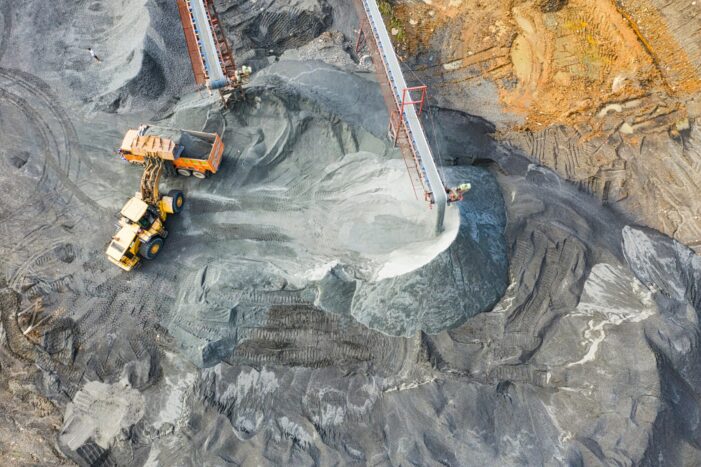
The “freedom city” narrative has circulated widely online alongside a separate and verifiable investment story: major backing for AI-driven mineral exploration in Greenland and elsewhere, led by KoBold Metals.
KoBold Metals, founded in 2018 and headquartered in California, uses artificial intelligence and machine-learning models to analyze geological data and improve the odds of discovering economically viable deposits of critical minerals such as copper, nickel, cobalt and rare earth elements. These materials are central to electric vehicles, renewable energy systems and advanced defense technologies.
In January 2025, KoBold closed a $537 million Series C funding round, co-led by Durable Capital Partners and T. Rowe Price, valuing the company at approximately $2.96 billion. Investors in the round included Andreessen Horowitz, Breakthrough Energy Ventures, Equinor, Mitsubishi, StepStone Group and others. With this raise, KoBold’s total funding has approached $1 billion, making it one of the most heavily capitalized startups operating at the intersection of AI and critical minerals.
Bill Gates and Jeff Bezos
Breakthrough Energy Ventures—backed by Bill Gates and Jeff Bezos—has been an investor in KoBold since 2019. Sam Altman, chief executive of OpenAI, invested through his venture firm Apollo Projects during KoBold’s Series B round in 2022, which raised approximately $192.5 million. KoBold has exploration projects across multiple jurisdictions, including Zambia, Canada and Greenland, and has entered joint ventures to fund early-stage drilling and geological analysis on the island.
Crucially, there is no evidence that Thiel, Gates, Bezos and Altman are collaborating on a single Greenland project, nor that mining investments are tied to any city-building plan. “Claims suggesting a unified effort to build a city alongside mining operations are inaccurate,” one investor familiar with KoBold’s structure said, noting that the company’s mandate is strictly mineral exploration and development.
Greenland’s rising profile reflects broader geopolitical and economic forces. As climate change reshapes Arctic access and Western governments seek to reduce dependence on Chinese-dominated critical mineral supply chains, interest in Greenland’s largely untapped resources has intensified. Local authorities have said mineral development could support economic diversification, but only under strict environmental regulation and with community consent.
U.S. President Donald Trump’s past remarks about acquiring Greenland, swiftly rejected by Danish and Greenlandic leaders, also helped elevate the island’s strategic significance in global discourse.
For now, the idea of a libertarian-style “freedom city” remains speculative, while AI-driven mineral exploration represents a tangible, heavily funded reality. Together, they illustrate how Greenland has become a canvas for both serious strategic investment and viral claims on social media.

Peter Thiel’s ‘Freedom City’ in Greenland: Did Billionnaires Invest in AI-Driven Mining? Fact Check added by Arun Nag on
View all posts by Arun Nag →